

Beginning Violin & Piano:
Combining traditional methods with modern approaches.
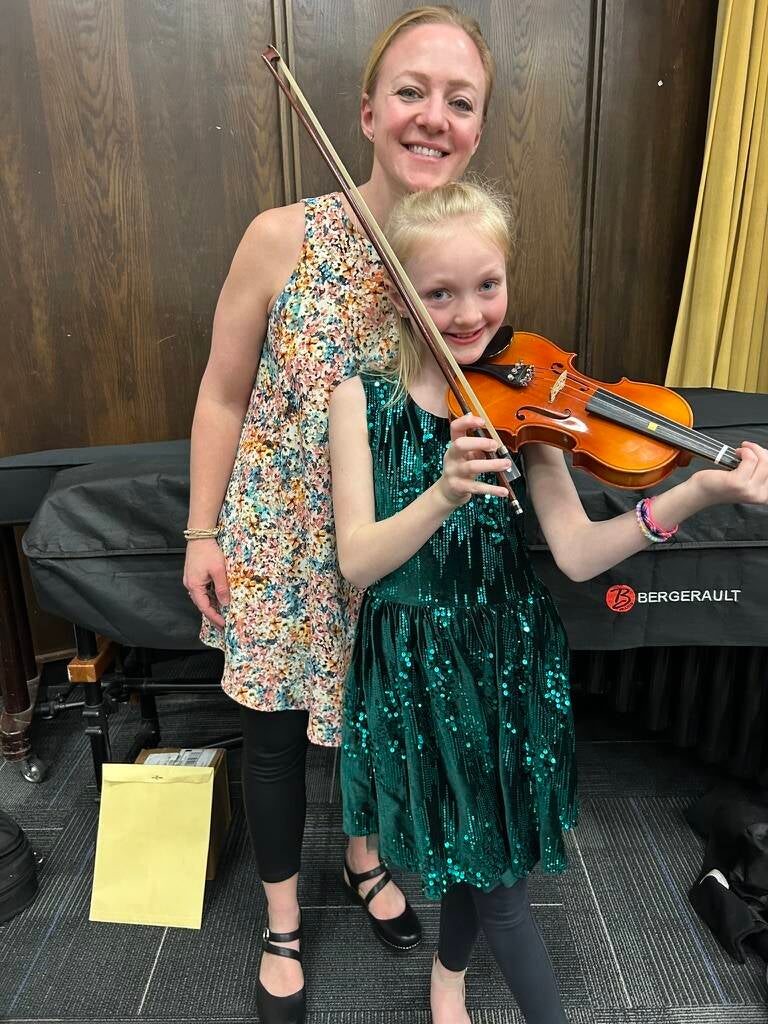
Violin: Traditional Teaching with Suzuki Training: I grew up learning the violin and in a traditional way and have taught traditional methods. Recently I have desired to improve my teaching skill set and have completed the first several levels of Suzuki training and have incorporated many useful skills and grown to value helping students gain confidence in memorizing pieces as often as possible, listening to the music they are learning, and the benefit of group class experiences.
For young beginners, I have found the books produced by pedagogy professors at the University of Indiana a phenomenal resource found at violinpractice.com. Parents print the books and can subscribe to their excellent videos for a small monthly fee to supplement lessons if desired. Also, I teach reading notes from I Can Read Music for Violin Book 1 and Violin Book 2 and find they are very useful tools to assist students as they become comfortable with reading both notes and rhythms and learning to play in ensembles.
Piano: For piano students, I teach from the Bastien books, which introduce note reading, scales, techniques and counting in a wonderfully systematic method.
Parental Support: For young students, parental support has a direct effect on the progress of the child, as long as that input is POSITIVE! It is very tempting to make comments that may sound critical and can easily become discouraging. I have several students whose parents come to the lesson each week. I notice a big difference as they support their child's practice in positive ways at home. Celebrating progress gives the child encouragement. During lessons I appreciate parents leaving any need for refocus to the teacher however, as children get confused with two authority figures. If parents have concerns, feel free to reach out via text or write your concerns or questions on the student lesson plans.
Student lesson information: This information is updated on the student's google doc found on the Lessons page and printed at the end of the lesson. Parents or adult learners can add questions that can be addressed at the lesson or personally. (If you put comments or questions in a different color text I won't accidentally miss them!)
Lifetime benefits from learning an instrument: Helping a child learn a new skill and continue to work on it until it is done well sets a strong foundation for learning and improvement in all aspects of their lives. Learning to make beautiful music has taught me patience, hard work, listening skills, cooperative playing, and the joy of accomplishment, and I see the same in my students. Giving a child the gift of music is a gift that can shape him or her for a lifetime with many transferable skillsets!
Violin Group Classes: Group classes are offered twice a month and often provide more fun and motivation for students than individual lessons. This is because they add not only a social element but also healthy competition, game playing, and learning that is not possible to add into lessons due to time constraints. Time has shown that students who perform with other students are more motivated and stick with the instrument far longer than students who simply play alone with an occasional recital. Generally violinists begin with individual lessons and then join group classes as they are ready.
Create Your Own Website With Webador